






MICROBIOGEN
October 2011
Microbiogen is presenting its Fuel and Food biorefinery concept at the ISAF XIX in Verona, Italy. MORE
June 2001
Geoffrey Bell, Chief Executive Office of Microbiogen Pty Ltd presented on our new Improved Yeast Strain to Enhance Corn Ethanol Production at the Fuel Ethanol Workshop in Indianapolis, 29th June.
Peter Milic, Head of Commercialization & IP, Mi MORE
Geoffrey Bell, Chief Executive Office of Microbiogen Pty Ltd presented on our new Improved Yeast Strain to Enhance Corn Ethanol Production at the Fuel Ethanol Workshop in Indianapolis, 29th June.
Peter Milic, Head of Commercialization & IP, Mi MORE
May 2011
Microbiogen presented "An alternative approach for making 2nd generation bioethanol viable" at the 33rd Symposium on biotechnology for fuels and chemicals in Seattle, WA, USA. Copies of the presentation are available on request through our Contact page. MORE
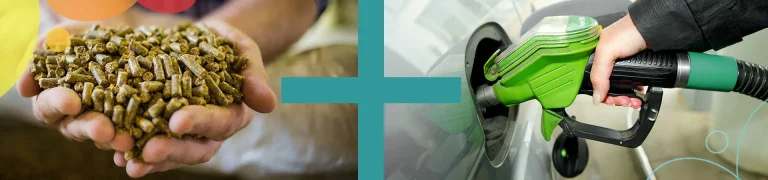
Providing a solution to the world’s fuel vs food crisis
MicroBioGen’s (MBG’s) technology meets the growing global need for sustainable renewable fuel and food. MBG’s competitive advantage lies in the unique features of our enhanced non-GM yeasts that convert plant biomass into ethanol and protein. We are the only company to have tackled this problem using natural breeding and selection.
MBG owns over 4,000 non-genetically engineered, patent-protected yeast strains that provide for a primary position in global food and fermentation markets. Advanced yeast genetics knowhow plus a unique bio-marker system enforce our robust intellectual property ownership, and provide a strong barrier to entry.
MBG is positioned to capitalize on its technology and products now. We offer licensing and partnership opportunities for companies and investors in first and second generation ethanol and yeast manufacturing. Read on for more information. If you have any questions or comments, please go to the “Contact Us” section.
Microbiogen - a world leading non-GM yeast development company
Microbiogen uses advanced breeding and genetic techniques to generate a range of yeast strains for industrial purposes. These strains have potential applications in a number of areas including ethanol production, high quality animal feed, baking, yeast extracts, enzymes, antioxidants, and waste stream management amongst others.
Expect Saccharomyces cerevisiae to remain THE key industrial fermentation
The yeasts developed by Microbiogen have base industrial characteristics that other organisms simply can't match. Characteristics such as ethanol tolerance, lack of nutrient requirements, acid tolerance, immunity to viral infection, high quality protein, and status as a safe non-GM organisms are critically important for next generation of ethanol production and food applications.
Our core goal - Help solve the global fuel and food crisis
Ethanol and other alternative fuels have been widely promoted in response to rising oil prices, energy security and greenhouse gas issues. Recently however, the large scale production of ethanol from food crops has been attacked for being one of the factors involved in driving up international food prices. Second generation ethanol production from waste cellulose rich biomass is widely seen as the solution to this problem. To enable the successful development of second generation fuels, Microbiogen has been working for several years towards generating the world's first non-genetically modified (non-GM) industrial strains of the yeast Saccharomyces cerevisiae capable of efficient conversion of almost all lignocellulose sugars into ethanol and other useful products.
Unique approach leading to unique outcomes
Successful completion of the project is expected to facilitate the production of ethanol in high volume at a price competitive with petroleum and thus fully realize its potential as liquid transport fuel. Microbiogen's technology has the potential to enable the production of economically priced ethanol from waste biomass, and is in the unique position to significantly improve current ethanol production efficiency while helping to solve the "food versus fuel" issue. The new strains of yeast being developed by Microbiogen are aimed at allowing the development of the world's first truly integrated "food and fuel bio-refineries".
Microbiogen believes that taking a breeding approach makes most sense
The advantage of the approach taken by Microbiogen can best be described by a comparison between the strengths of genetic engineering and breeding for the improvement of organisms. If dog breeders wanted to produce a green fluorescent poodle, then genetic engineering would be the only approach since there are no genes for green fluorescence in poodles. Thus using genetic engineering it would be possible to take genes for green fluorescent protein from a coral or a jellyfish and insert those genes into the poodle genome. The result may be a poodle that is fluorescent.
Breeding is best at changing a complex range of characteristics
However, if the breeders wanted a hardy and intelligent dog that could pull a sledge through the snow a genetic engineering approach would not be the best approach. It would be extremely challenging to develop a dog suitable for pulling a sled (e.g. a husky type dog) via genetic engineering due to the multiple poorly understood traits needed over and above those already exhibited in a poodle. Instead, the best approach for this type of change would be through breeding since so many changes are required. Breeding is the only technology currently available that would have a reasonable chance of success.
New yeast strains require a upgrading through complex character changes
It is the same with yeasts needed for second generation ethanol plants. The new organisms have a range of complex industrial characteristics needed and breeding is thought by Microbiogen to be the most practical approach with the greatest potential to succeed. The current glucose fermenting yeast strains need a breeding program to evolve them so that they can ferment a wider range of sugars and operate in more severe hydrolyzate conditions and at the same time retain their industrial characteristics.
Yeast is the preferred fermenting organism today, but can only use "food" sugars
Through the ages most ethanol has been produced by converting the "food" sugars (primarily glucose) into ethanol using Saccharomyces cerevisiae. The yeast has a unique set of characteristics that make it the organism of choice for today's fast growing ethanol industry.
World needs new yeasts that also utilise "wood" sugars
The ethanol industry is already responsible for substituting part of the world's addiction to non-renewable fossil fuels. At this stage emerging second generation ethanol plants are unable to efficiently convert all the sugars generated from waste biomass to ethanol and other value added products due to the inclusion of C5 (wood) sugars. Commercial yeast strains today can only convert the "food" sugars like glucose which contain 6 carbon atoms in their structure. The Microbiogen breeding program is designed to generate new yeast strains that can also grow and/or ferment the xylose (C5 or wood sugar).
Scientific dogma says Saccharomyces cerevisiae can't use xylose "wood" sugar
Although food resources can provide streams that are rich in C6 sugars, there are a range of C6 and C5 sugars that occur in non-food plant biomass, By far the most abundant C5 sugar is a sugar called xylose. These C5 sugars are very abundant and are derived from non-food sources such as wood, grass, paper, etc
Scientific dogma still asserts (as at late 2008) that although this natural yeast is capable of rapidly fermenting C6 sugars, it is not capable of fermenting or growing on C5 sugars (that is sugars containing only 5 carbon atoms). .
Microbiogen research has shown scientific dogma is not true
Microbiogen has shown this current dogma is not true and has used natural selection to breed strains of Saccharomyces cerevisiae that can grow vigorously on xylose and still produce ethanol under industrial conditions.
MBG breakthrough expected to be critical for next generation ethanol refineries
Significant progress has been made in pre-treatment and hydrolysis of plant biomass and there are a number of competing technologies that are already at the demonstration stage. However, fermentation is still lagging despite a concerted effort in recent years and there appear to be no industrially capable organisms than can ferment all the sugars. This is the area where MBG has been focusing its efforts.
Microbiogen yeast strains expected to suit a number of process routes
Due to the nature of the yeast strains developed by Microbiogen, it is expected that these industrially derived strains will be suitable as the fermenting organism for a range of different pre-treatment and hydrolysis routes. Whereas many developers today need to design pre-treatment and hydrolysis processes that pamper the fermenting organism(s), the Microbiogen strains with their industrial background are expected to be better suited and even result in more flexible and cheaper front end process designs.
Strategic collaboration is important if an economic process is to be developed
The task of developing an economic process route for the production of ethanol from waste biomass is a particularly difficult task and one that has been underestimated by many developers over many years. The basic premise of breaking down plant material into sugars and then fermenting into ethanol is one that has multiple hurdles to overcome.
Over millions of years, nature has evolved plants to resist breakdown by micro-organisms, enzymes or other environmental factors in the battle of survival of the fittest. Microbiogen is developing the yeast strains that are expected to be able to "do the job" on the fermentation front, but this must be matched with appropriate pre-treatment and hydrolysis routes.
Microbiogen is looking to collaborate and accelerate development
Microbiogen is now in a position where it can test its range of strains on hydrolyzates developed by third parties.